Composting helps reduce waste and contributes to environmental sustainability. Since food and other compostable materials make up 20% of waste at the landfill, compost offers the best alternative for handling organic waste. It also helps in reducing the Greenhouse Gas produced when organic waste is dumped at landfills. Composting the waste also reduces pressure on city council or responsible organizations for acquiring land used for landfilling.
What is Compost?
Compost is a decomposed organic material that can be used to improve soil’s physical, chemical, and biological properties. Compost is rich in plant nutrients and beneficial organisms like bacteria, protozoa, nematodes and fungi which improves soil fertility in gardens, landscaping, horticulture, urban agriculture and organic farming thus reduces dependency on commercial chemical fertilizers.
A compost is made by decomposing a mix of green waste (nitrogen-rich materials such as leaves, grass, and food scraps) and brown waste (woody materials rich in carbon such as stalks, paper, and wood chips). Generally, it takes approximately six to nine months before the compost is ready for use. The length of time taken for the compost to be ready depends on whether the compost has adequate amount of water and right size of wood chips, and how often the materials are turned for aeration.
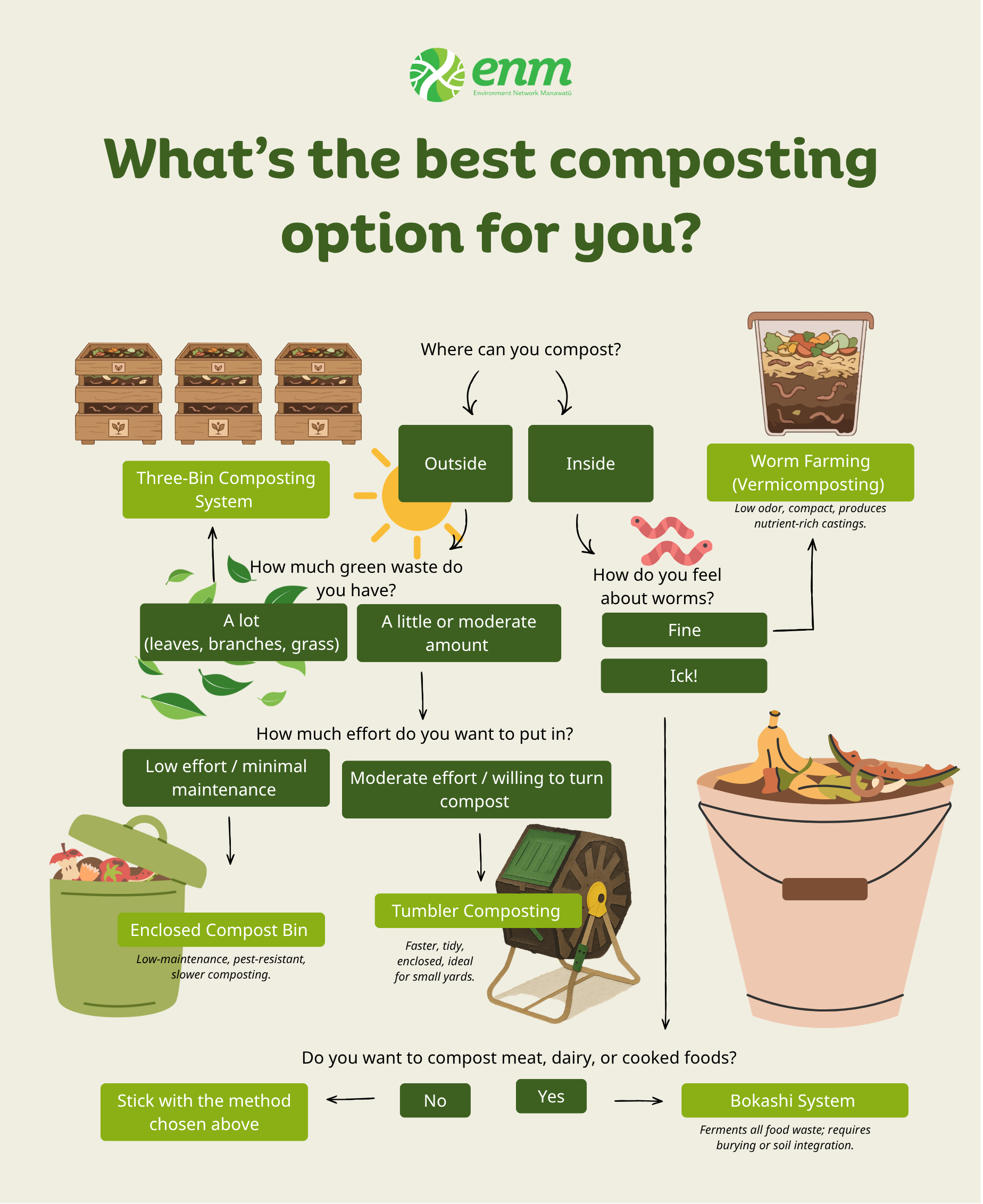
Deciding on your composting method
 ENM on Facebook